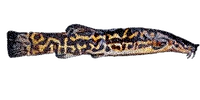
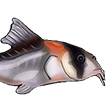



The Genus Panaque is identified by the teeth, which are spoon-shaped. This means that the teeth are noticeably wider at the tip than at the base. Other loricariidae have teeth that are similar width all the way from one end to the other. A second distinguishing feature is the lack of a buccal papilla, which is a "flap of skin" on the inside of the mouth. See pictures in this PDF on Pterygoplichthys. Typical unique pattern. A dark brown to black base coloration with very thin white to yellow vertical lines starting form the upper body and going to the lower body. As the fish grows lines tend to become broken to the point, sometimes, where they become spots. Fins have thin white to yellow bands. Juveniles have rather white lines, these lines tend to turn yellow as the fish gets older.
This species belongs to the group of small sized typically wood eating plecos that has been proposed to belong to a new genus, Panaqolus. This new genus was erected in a special Loricariid only spring 2003 issue of the German aquarist magazine DATZ (well known in catfish circles as the birthplace of the l-numbers). For an aquarist, having a mini-Panaque genus to classify many new imports as is most useful in a variety of ways; not least in the quick understanding of diet requirements and facilitation of captive breeding attempts. So, we were understandably quick to adopt this new placement. That said and done, it does not appear that it will gain acceptance among the majority of the scientific community. Late in 2003, we reverted to calling this species Panaque.
Typically found in parts of the river 30-50 meters wide river with a depth up to 1m. Conductivity around 190 microsiemens. A strong current is preferred.
A wood eating species; vegetables are avidly eaten. Animal protein can be given once in a while but should not be the main diet except when conditioning the fish for breeding as it helps the female to mature the eggs.
Most ideally suited for the more active community tank with shoaling charcins the ideal. Active fish should be chosen carefully as to avoid species that might nip at this plecos ornate tail fin extensions.
Has this page been useful? Please click on the paypal button to make a secure & direct donation to our monthly hosting costs - it makes a real difference to us and we'll record the good deed for posterity. Help keep us free for everyone to enjoy!