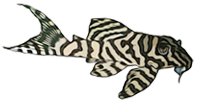



The name Ancistrus is derived from the Greek word agkistron, meaning hook, in reference to the interopercular odontodes that are hooked. Named after the Rio Claro, where it was collected.
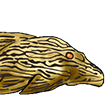
Mature males and sometimes females have soft tentacles (bushy fleshy growths) on the snout - this is unique to the genus Ancistrus. The base colouration is brown with a whitish abdomen region. The markings are beige to yellowish white, and are a completely irregular reticulated pattern. Snout tentacles of males have a pattern of light-coloured spots. The dorsal and caudal fins have irregular bands. Overall, this species is rather easy to ID because of its small adult size and quite unusual pattern. Still, it can be confused with young specimens of common Ancistrus unless the mouth shape is examined as it is different, in A. claro it is more oval shape than rounded
Males have branched tentacles on the snout, females can occasionally have 2-3 very little tentacles, but most don't have any. Mature females have a darker base colouration. The vermiform lines are found predominantly on males.
This species is found in Brazil, in the state of Mato Grosso, in the Rio Claro. It is also found in the Rio Coxipo and some small western tributaries. Coxipo(click on these areas to find other species found there) Claro(click on these areas to find other species found there)
Not a picky eater, will eat about anything, from vegetables to bloodworms. A vegetable diet is preferable and animal proteins can be given once or twice a week but should not make up the main diet.
Its natural habitat consists of fast flowing waters over a rocky bottom. Likes also to stay in quiet zones of these same river rapids. Safe will robust plants.
Typical Ancistrus manner. Males stay in caves and guard the brood. Females lay about 20 to 35 eggs.
Eggs hatch after 5-7 days. After about 2 weeks the yolk sac is totally absorbed and the young start to eat. Fry are raised like other members of the genus.
- Show thumbnails of all species of Ancistrus -
Search Planet Catfish for more on Ancistrusclaro - BBcode (for use in linking to this page from forum posts)
- Email a friend a direct link to this species page - Look up Ancistrusclaro on Fishbase, I.T.I.S. or ispecies search. - Print friendly layout of data - URL (for use in linking to the species from anywhere on the web)
Has this page been useful? Please click on the paypal button to make a secure & direct donation to our monthly hosting costs - it makes a real difference to us and we'll record the good deed for posterity. Help keep us free for everyone to enjoy!