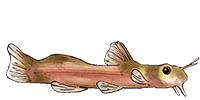
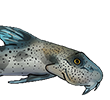



Cory = helmet, doras = skin. In this case it was incorrectly used to mean armour (cuirasse) instead of skin in allusion to the dual rows of plates that run along the flanks of this genus. Named after the Rio Meta, from which it was collected.
Corydoras are identified by their twin rows of armour plates along the flanks and by having fewer than 10 dorsal fin rays. They are most commonly confused with the other genera in the sub-family, namely Brochis, Scleromystax and Aspidoras. C. metae is often confused with C. melini (which has an unbroken black stripe from dorsal to caudal fins, C. metae has no colour on its caudal fin or mid-body flanks) and occasionally C. davidsandsi (Lighter, more orange basic colouration and slightly more elongate body). There is also an ''imitator'' long-snouted species (C. simulatus).
Open gravel swimming space preferably shaded by large broadleaf plants. A large open cave for refuge also helps settle in these fish. They may sit inactive for periods of time when resting, but will always venture forth for food.
Around 20-30 eggs are produced, these are laid slowly in clutches and carried by the female in a ''pouch'' formed by her pelvic fins. They are carried to the underside of broad leaves or sometimes the aquarium glass and deposited carefully.
- CotM 1997 January - Show thumbnails of all species of Corydoras -
Search Planet Catfish for more on Corydorasmetae - BBcode (for use in linking to this page from forum posts)
- Email a friend a direct link to this species page - Look up Corydorasmetae on Fishbase, I.T.I.S. or ispecies search. - Print friendly layout of data - URL (for use in linking to the species from anywhere on the web)
Has this page been useful? Please click on the paypal button to make a secure & direct donation to our monthly hosting costs - it makes a real difference to us and we'll record the good deed for posterity. Help keep us free for everyone to enjoy!