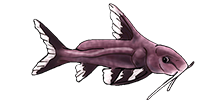
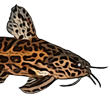



The Genus Panaque is identified by the teeth, which are spoon-shaped. This means that the teeth are noticeably wider at the tip than at the base. Other loricariidae have teeth that are similar width all the way from one end to the other. A second distinguishing feature is the lack of a buccal papilla, which is a "flap of skin" on the inside of the mouth. See pictures in this PDF on Pterygoplichthys. A detailed account can be found in the Catfish of the Month article (link below).
This species belongs to the group of small sized typically wood eating plecos that has been proposed to belong to a new genus, Panaqolus. This new genus was erected in a special Loricariid only spring 2003 issue of the German aquarist magazine DATZ (well known in catfish circles as the birthplace of the l-numbers). For an aquarist, having a mini-Panaque genus to classify many new imports as is most useful in a variety of ways; not least in the quick understanding of diet requirements and facilitation of captive breeding attempts. So, we were understandably quick to adopt this new placement. That said and done, it does not appear that it will gain acceptance among the majority of the scientific community. Late in 2003, we reverted to calling this species Panaque.
Like all members of the genus, males grow elongated interopercular odontodes during the breeding season. Males develop noticeable odontodes along the dorsum as well.
P. maccus is found throughout the Orinoco drainage in the Venezuelan and Colombian great plains known as the Llanos. Orinoco(click on these areas to find other species found there)
The aquarium water should be clear in colour with neutral values. Measurements taken at the Rio Tinaco in the dry season were temperature 80°F, pH 7.5, and fairly hard at 3,000 mu. In the wet season the water is cooler, softer and has a neutral pH due to the heavy rains.
A wood-eating fish, the tank should be decorated with several different types of driftwood. These fish really like to have something to chew on and squash, cucumber, and other vegetables should be readily available to them (yams are a favourite). Supplement two to three times weekly with frozen foods.
The Biotope: P. maccus are only found amongst driftwood tangles close to the banks in the main river channels. Their striped brown and cream coloured body provides excellent camouflage in this environment. Place various types and lengths of driftwood at slanting angles from the back of the tank to the front. The back and sides of the tank should be covered with a dark background. Use sand or fine gravel that is a red-brown in colour for the substrate. Hide the spawning caves along the back of the tank behind the driftwood.
A peaceful fish well suited to the community tank provided it has driftwood. The tank must have good mechanical filtration as these fish produce lots of waste from their steady diet of wood.
Other loricariids, small cichlids and tetras. In a small tank (15-20 gallons) add a school of small tetras. Silver hatchet tetras were common in the Rio Tinaco. A larger tank can house a community of wood eating loricariids. Other loricariids caught side by side with P. maccus included: Hypostomus plecostomus, Hypostomus emarginatus (L 153), Hypostomus plecostomoides (L166), L092, Hypoptopoma, Otocinclus, Lamontichthys llanero, and Glyptopterichthys (L154). A tank with this many wood-eating loricariids requires heavy filtration and frequent large water changes.
The fish should be maintained for two months under dry season conditions (see above) with thrice weekly feedings of frozen foods. In preparation for breeding, add a power head and air stone to the tank, unplug the heater, and begin making 20 percent daily water changes with cool rain or reverse osmosis water. The temperature should be allowed to fall to 70-72F. After four water changes, plug the heater back in and wait for the spawn. If, after one month, the fish have not spawned start the process over again. It may take a few cycles to get the fish spawning. Provide various sized spawning caves made from PVC or slate. The caves should be just large enough to allow the female (which is larger) to squeeze in and five to six inches in length.
- Email a friend a direct link to this species page - Look up Panaquemaccus on Fishbase, I.T.I.S. or ispecies search. - Print friendly layout of data - URL (for use in linking to the species from anywhere on the web)
Has this page been useful? Please click on the paypal button (right) to make a secure & direct donation to our monthly hosting costs - it makes a real difference to us and we'll record the good deed for posterity. Help keep us free for everyone to enjoy!