



Cat-eLog Data Sheet | |
|---|---|
| Scientific Name | Ancistrus triradiatus Eigenmann, 1918 |
| Common Name(s) | None |
| Type Locality | Quebrada Cramalote, Barrigona Villavicencio, Colombia. |
| Pronunciation | an SISS truss - try RAID ee ah tuss |
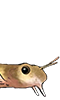
| Etymology | The name Ancistrus is derived from the Greek word agkistron, meaning hook, in reference to the interopercular odontodes that are hooked. This specific epithet refers to the three (tri=three) rays (radiatus=rays) or divisions of tentacles on its snout. |
Species Information | |
| Size | 120mm (4.7") SL. Find near, nearer or same sized spp. |
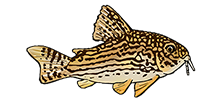
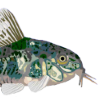
| Identification | Mature males and sometimes females have soft tentacles (bushy fleshy growths) on the snout - this is unique to the genus Ancistrus. A. triradiatus is an overall mottled brown that can range from golden to dark brown. The caudal and paired fins sport a pattern of darker markings that often merge to form wavy lines. |
| Sexing | Typical for the genus with males possessing the so-called ''bushy nose''. Females also may have much smaller growths on the head but to a much lesser extent. |
Habitat Information | |
| Distribution | Exported in large numbers via Villavicencio, Colombia for the aquarium hobby. Most likely occurs throughout the upper Rio Meta and in the lower reaches of Andean streams that feed the Rio Meta. Records from the Rio Magdalena and Maracaibo basin drainages are suspect. Orinoco |
| pH | 6.6 - 7.6 |
| Temperature | 24.0-30.0°C or 75.2-86°F (Show others within this range) |
| Other Parameters | Water should be well aerated. |
Husbandry Information | |
| Feeding | Thrives, and even spawns, on a vegetarian diet of fresh vegetables (cucumber, zucchini, squash etc). Will also except most any prepared aquarium foods. Meaty foods can be fed once a week to condition adults for spawning. |
| Furniture | This fish can easily adapt to most aquarium set ups provided it has a hiding place. A reproduction of its natural habitat would include driftwood and medium and small stones over a sand substrate. |
| Compatibility | As with most Ancistrus, a great addition to almost any aquarium. A peaceful aquarium resident. It may tangle with other benthic fishes if there are not enough hiding places available. |
| Suggested Tankmates | Appropriate with most community fish that aren't overly big or aggressive. |
| Breeding | Easily accomplished with adult fishes. The male should provided a suitable cave that has only one entrance. Water conditions are not particularly important, but the best success is had in water with a neutral to slightly acidic pH and low general hardness. Females produce from 20-60 eggs depending on their size and become gravid every 4-6 weeks depending on diet. |
Further Information | |
| References | Proc. Am. Philos. Soc.v. 56 (no. 7) - pp680 |
| Registered Keepers | (1) madattiver (k: 8), (2) funkyj1313, (3) Lornek8, (4) Armadillo Del Rio, (5) einstein-a-go-go, (6) bslindgren, who also notes: "Excellent algae eater. As they mature, they seem to hide more - an albino was out a lot and one blind in one eye is out more. A third male died after getting into a Korallia2 powerhead.
One died. Never come out during day now so I actually thought they were both dead.", (7) Plecofanatic1989, (8) Haavard Stoere (k: 3), (9) Daragh (k: 2), who also notes: "Spawned June 08 @ pH 6.8. 26C 150 TDS.", (10) Glauko (k: 4), (11) Lakatu, (12) leej24 (k: 60), (13) zenyfish, (14) KittyKat (k: 3), (15) weeb (k: 2), (16) TheFishGuy, (17) janne dahle (k: 3), (18) Donald (k: 3), (19) PvtDGrif, (20) Redcatman (k: 14), who also notes: "These live in a community tank with several other species of catfish, barbs, danios, etc. The original fish were a second generation tank bred trio. These breed regularly in my tank. Usually a few fry survive and grow and these are thinned out to keep the population down to a reasonable number. I like to see the mixed group of youngsters and adults in my tank.
I live in a soft water area. The only water quality parameter measured regularly is pH which is kept between 6.5 and 7.0. Ammonia and nitrite are usually zero when I do occasionally measure it. Nitrate controlled by parial water changes every 2-3 weeks. The tank is filtered using an old (40 years!)Eheim external filter which has been in continuous use since it was purchased. Contains various Eheim filter materials also bought 40 years ago. Only material replaced is a layer of filter wool. Filter is cleaned out when water flow drops which is usually every 2-3 months.", (21) Arlington (k: 2). Click on a username above to see all that persons registered catfish species. You can also view all "my cats" data for this species. |
| Breeding Reports | None. |
| More Resources |
-
Search Planet Catfish for more on Ancistrus triradiatus
- BBcode (for use in linking to this page from forum posts) - Look up Ancistrus triradiatus on AquaticRepublic.com
- Look up Ancistrus triradiatus on Fishbase, I.T.I.S. or ispecies search. - URL (for use in linking to the species from anywhere on the web) |
| Hits | 16650 hits. |
| Last Update | 2008 Jan 14 08:42 (species record created: 2002 Jun 12 00:00) |
Registered users: Bing [Bot], Google [Bot], Google Feedfetcher, Shane
© 1996 - 2012 PlanetCatfish.com, part of the Aquatic Republic Network group of websites. All Rights Reserved. By accessing this site you agree to our Terms and Conditions of Use.