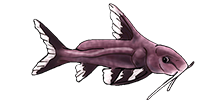



Cory = helmet, doras = skin. In this case it was incorrectly used to mean armour (cuirasse) instead of skin in allusion to the dual rows of plates that run along the flanks of this genus. From Amapa, the state in Brazil where the species was found. Latin ensis denoting a place, locality or country.
Corydoras are identified by their twin rows of armour plates along the flanks and by having fewer than 10 dorsal fin rays. They are most commonly confused with the other genera in the sub-family, namely Brochis, Scleromystax and Aspidoras. The colour pattern of this species varies considerably throughout its range and, because of this fact, it is often confused with the following species. C. septentrionalis originating from Venezuela, C. simulatus originating from Colombia and both C. treitlii and C. solox which were described from Brazil. C. amapaensis differs from all but C. septentrionalis by the presence of a third pair of rictal barbels - see the catfish of the month article for more info. and pictures. There is no easy way to distinguish C. amapaensis from C. septentrionalis, the former attain a slightly larger adult size and have a more rugged appearance than the latter. Although as youngsters they both have a light banding in their caudal fins, adult C. amapaensis have clear caudal fins.
- CotM 2009 November - Show thumbnails of all species of Corydoras -
Search Planet Catfish for more on Corydorasamapaensis - BBcode (for use in linking to this page from forum posts)
- Email a friend a direct link to this species page - Look up Corydorasamapaensis on Fishbase, I.T.I.S. or ispecies search. - Print friendly layout of data - URL (for use in linking to the species from anywhere on the web)
Has this page been useful? Please click on the paypal button to make a secure & direct donation to our monthly hosting costs - it makes a real difference to us and we'll record the good deed for posterity. Help keep us free for everyone to enjoy!