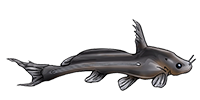
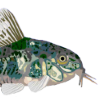



/siluriformes/plotosidae/tandanus/tandanus/1.jpg "Tandanus tandanus")
/siluriformes/plotosidae/tandanus/tandanus/2.jpg "Tandanus tandanus")
/siluriformes/plotosidae/tandanus/tandanus/3.jpg "Tandanus tandanus")
/siluriformes/plotosidae/tandanus/tandanus/4.jpg "Tandanus tandanus")
/siluriformes/plotosidae/tandanus/tandanus/5.jpg "Tandanus tandanus")
/siluriformes/plotosidae/tandanus/tandanus/6.jpg "Tandanus tandanus")
/siluriformes/plotosidae/tandanus/tandanus/7.jpg "Tandanus tandanus")
/siluriformes/plotosidae/tandanus/tandanus/8.jpg "Tandanus tandanus")
/siluriformes/plotosidae/tandanus/tandanus/9.jpg "Tandanus tandanus") Xanthic specimen (above)
Xanthic specimen (above)/siluriformes/plotosidae/tandanus/tandanus/10.jpg "Tandanus tandanus")
/siluriformes/plotosidae/tandanus/tandanus/11.jpg "Tandanus tandanus")
/siluriformes/plotosidae/tandanus/tandanus/12.jpg "Tandanus tandanus")
 Cat-eLog Data Sheet Cat-eLog Data Sheet | |
|---|---|
| Scientific Name | Tandanus tandanus (Mitchell, 1838) |
| Common Names | Tandan Australsk Ferskvandsmalle (Denmark), Dewfish, Eel Tail Catfish, Freshwater Catfish, Tauwels (Germany) |
| Type Locality | Lagoon near Tangulda, Namoi River, New South Wales; river between Gwydir River and MacIntyre River, New South Wales, Australia. |
| Synonym(s) | Plotosus tandanus |
| Pronunciation | Tahn dah ness - tahn dah ness |
| Etymology | The origin of the name is unclear. Possibly from an Australian Aboriginal name for the fish. |
| Articles |  - CotM - CotM  2018 May - Shane's World Species How to Put a Tandanus in Your Tank 2018 May - Shane's World Species How to Put a Tandanus in Your Tank |
| Species Information | |
| Size | 900mm or 35.4" SL. Find near, nearer or same sized spp. |
| Identification | Second dorsal fin originating above middle of body. Smaller fish (>30 cm) have a mottled coloration. |
| Sexing | Males possess a long cylindrical genital papilla and females a triangular one. |
| Habitat Information | |
| Distribution | Oceania: endemic to Australia. Australia waters, Eastern Australia Waters (click on these areas to find other species found there) Login to view the map. |
| IUCN Red List Category | Least Concern , range map and more is available on the IUCN species page. Last assessed 2019. |
| pH | 6.4 - 8.0 |
| Temperature | 10.0-26.0°C or 50-78.8°F (Show species within this range) |
| Husbandry Information | |
| Feeding | Feeds on small crustaceans, insects, snails and small fishes in the wild. Carnivorous but not a fussy eater in the aquarium. Will take most frozen/live/prepared foods, especially meaty types. User data. |
| Furniture | Found in slow-flowing rivers and lakes with fringing vegetation, being more common in the latter. Hiding spaces in the form of PVC pipes and/or driftwood are necessary. |
| Compatibility | A peaceful, solitary species. Juveniles may form loose aggragations. Should not be kept with smaller fishes. |
| Breeding | Spawns when temperatures rise to between 20-24?Cduring spring and summer. Spawning is not stimulated by flooding. The number of eggs increases with size, ranging from about 2800 to 20600 eggs in females between 390 and 530 mm long. They build a circular to oval nest, generally around 0.6-2.0 m in diameter, from pebbles and gravel. During courtship, both male and femal circle and weave about the nest. The female then arches her body, agitates her pelvic fins and releases eggs about 30 cm above the nest. The eggs are spherical (about 3 mm in diameter), non-adhesive, and a light greenish yellow in color. The male fertilizes the eggs, which sink to the botom and settle into the gravel of the nest. One of the adults, usually the male, will remain at the nest until the eggshatch in about 7 days. The larvae are about 7 mm long when hatched, and barbels appear after 3 days. |
| Breeding Reports | There is no breeding report. |
| Further Information | |
| Reference | Three expeditions into the interior of eastern Australia v. 1, pp opp. 44, 95, Pl. 5 (fig. 2). |
| Registered Keepers | There are 15 registered keepers, view all "my cats" data. |
| Wishlists | Love this species? Click the heart to add it to your wish list. There is no wish to keep this species. |
| Spotters | Spotted this species somewhere? Click the binoculars! There are 4 records of this fish being seen, view them all. |
| Forum BBCode | |
| Search for T. tandanus | |
 | Look up T. tandanus on AquaticRepublic.com |
 | Look up T. tandanus on Fishbase |
 | Look up T. tandanus on Encyclopedia of Life |
 | Look up T. tandanus on Global Biodiversity Information Facility |
| LFS label creator ARN ref:1.11.114.325 | |
| Last Update | 2025 Jan 01 12:22 (species record created: 2001 Apr 24 00:00) |